It is with profound sadness that we share with Viper Class Members and friends that Paul Young has died while on vacation in Africa.
Paul became the Viper Class Builder 20 years ago. He essentially redesigned the boat and helped rebuild the class association, and in doing so created the sportboat and the Viper tribe that we all love today. He embraced the owner-driven class association model. He saw Rondar as the class’s builder. We were not just customers, we were his partners and the success of the Viper Class was the result of a partnership. Thus, when Paul started to contemplate retirement, he approached the task of transitioning to a new successor builder as a partnership with the Class Association.
Paul flew to SERO’s factory in Michigan earlier this summer to spend 10 days assisting Chris McLennan’s team at SERO as they built the first two SERO Vipers. This is very unusual during a builder transition. It speaks volumes to Paul’s affection for the Viper class, and it speaks volumes about Chris McLellan’s approach and humility. Working together, they ensured a smooth builder transition. I chatted to Paul a couple of times when he was in Michigan. He was wistful about the end of a major chapter in his life, but he felt the class was in good hands, and it was clear that Paul and Chris had struck up a professional friendship. They were already talking about other projects they could do together.
Paul built 264 Vipers at the Rondar workshop in Wiltshire and helped SERO build another two.
It was a shock to hear that Paul died. Paul was full of life and energy. He was excited about the future. His two sons had both graduated from college and were pursuing their careers. He told me that he was going to follow through on his promise to Val (his lovely wife) to work less and have more time for adventures. The safari to Botswana was part of that. Paul was an entrepreneur, so I could not envisage him retiring completely and pottering around his garden. He would always have some local part-time business interest to satisfy his urge to create, but the plan was to transfer Rondar to his employees over the next year or so. It seems likely that in Africa, Paul’s big, generous heart, a heart that powered a man that lived life to the full, had finally given enough.
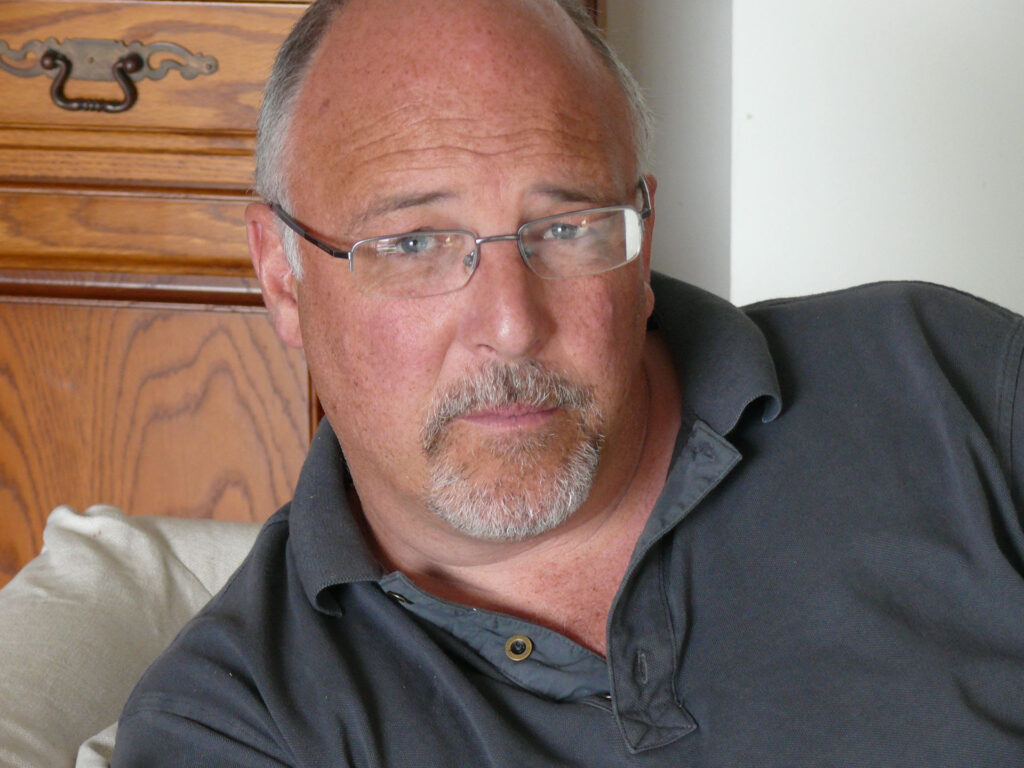
We will miss him dearly. Paul was one of the good ones. He was an understated but brilliant boat designer and builder. In the twenty years that Rondar built 505 dinghies, Paul’s designs won 18 of 20 world championships. The 505 was always his first love. In its heyday, the 505 was the ultimate dinghy where the best designers and builders, and the world’s best sailors competed on a global stage. Paul joked that the Viper arrived at just the right time in his life when his 505 was starting to date younger men.
Paul built his first dinghy as a teenager when he rescued a decrepit wood Enterprise from a Guy Fawkes night bonfire. This turned into a small business of renovating dinghies in his father’s garage. Motivated by the goal of designing and building boats, he surprised his family by applying effort to his A levels at school and getting into the prestigious naval architecture program at Southampton University. He was a designer, an engineer and a craftsman. He could calculate loads and produce engineered drawings but he could also just “eye up” a problem and come up with a solution.
Paul credits Brian Bennett with designing a “brilliant hull shape” for the Viper 640. Paul always wanted to build the Viper from the time he first saw the boat at a boat show. When he finally got his chance 8 years later, he asked the Class to allow him to modernize some aspects of the design. He replaced the aluminum mast with a carbon rig. He moved the chainplates out and aft for better rig geometry. He took the weight saved aloft from the mast and added the weight to a redesigned keel bulb. He redesigned the shape of the spinnaker and moved the spinnaker sheet blocks forward for a faster gybing boat. He created a new throat for easier dowsing and he introduced the Gnav (reverse vang) to create more room in the cockpit. Paul was passionate about making high-performance sailing easy and accessible, and he was always looking at ways to make the Viper easier and simpler to sail. He introduced the split end mainsheet which centered the boom automatically. He designed a conversion kit to introduce a vertical rudder that could be retrofitted to all existing boats, which made the boat easier to steer in higher winds.
Paul belonged to the “simplicity” school of sailing. He liked that his 505s were faster with less strings. He abhorred unnecessary “fluff”. Sometimes he went too far. He argued that lower shrouds were for people who could not design good masts. We fought him successfully on that. But he demonstrated his disdain by winning races in his Viper with his lowers dangling with no tension. He liked a compass but never used a GPS to judge distance to the start line.
Paul was a funny, humorous man who loved sailing, vintage jaguars, a pint of beer, rugby and practical jokes. He eschewed contracts in favor of a handshake. But mostly Paul was a good man and a loyal friend. My new SERO Viper, Viper #401, arrived last Friday. As you can imagine, my new boat stirs mixed feelings. I am very excited to be sailing this boat at the Pensacola North American Championship next week…..but it is also one of the last, if not the last, boat built by a very dear friend.
Justin Scott; former Viper 640 Class President


